Founders
The Solo Founder Reality Is Mostly Just Tab Management
Published · Founders
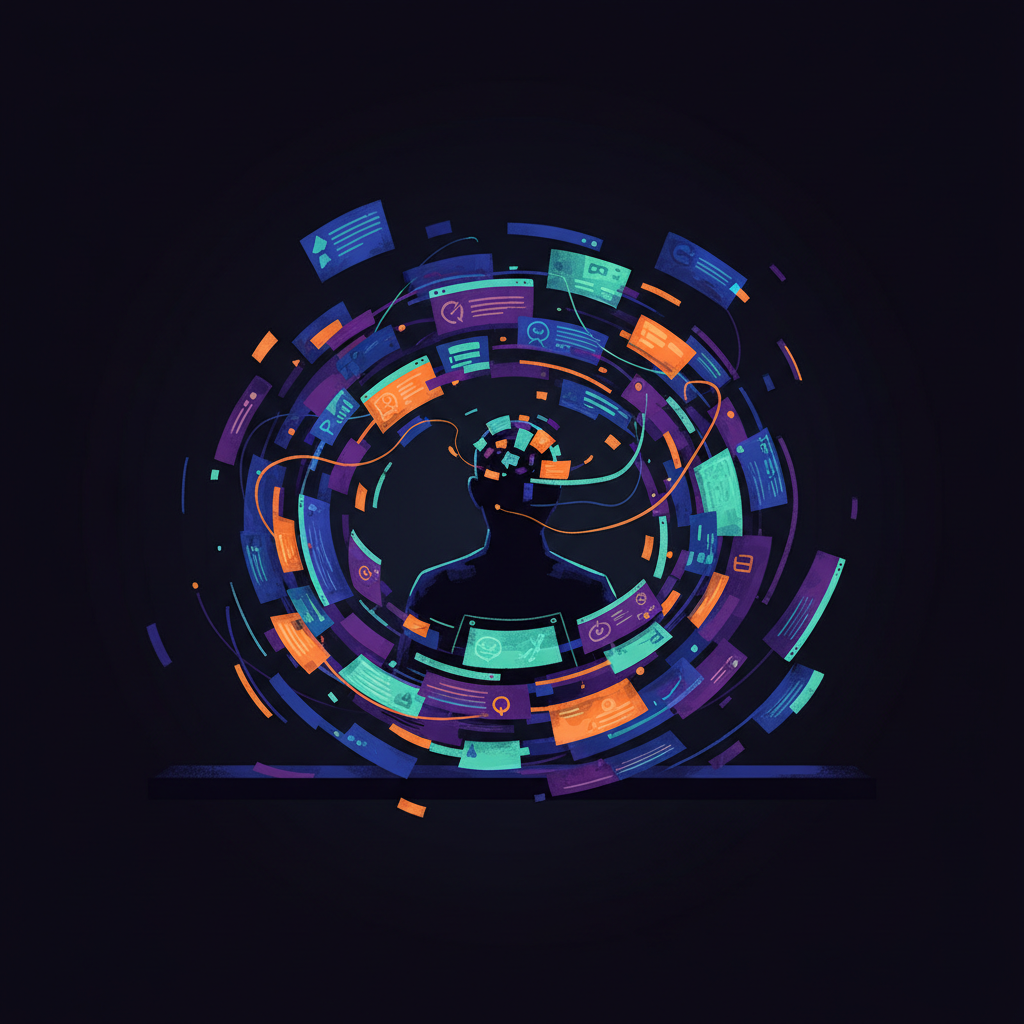
Stop romanticizing the grind. The real bottleneck for solo builders isn't lack of vision it’s the mental tax of context switching between 47 open tabs.
Stop Managing Tools and Start Building:
The life of a solo founder is often romanticized as a continuous stream of building, shipping, and innovating. But if you look closely at your screen right now, the reality probably looks different. You likely have a project management board in one tab, a CRM in another, a financial tracker buried in a spreadsheet, and a chaotic mix of notes scattered across three different apps.
You aren't just building a product; you are paying a hidden "administrative tax." Every time you switch contexts to update a ticket, log an expense, or search for a meeting note, you are draining the mental energy required for deep, impactful work.
The problem isn't that you lack discipline. The problem is that your digital workspace is fragmented. Most software is built for large, siloed enterprise teams, not for the agile, context-switching reality of a solo operator.
Here is how you can stop managing your tools and start reclaiming your time.
The True Cost of Context Switching
Research shows that it takes an average of 23 minutes to regain deep focus after an interruption. When your workflow requires you to jump between five different applications just to complete a single feature release, those minutes compound into hours of lost productivity every week.
This fragmentation leads to three critical failures for solo founders:
1. Information Silos: Your customer feedback lives in your email, but your product roadmap lives in a separate project tool. Connecting the dots requires manual effort.
2. The "Work About Work" Trap: You spend more time organizing tasks, updating statuses, and formatting notes than actually executing the work.
3. Decision Fatigue: Constantly deciding where to put information or how to track a metric exhausts your cognitive resources before you even start building.
The Philosophy of Subtraction
The instinct when facing chaos is often to add another tool—a new integration, a better dashboard, a smarter automation app. But adding complexity rarely solves the problem of fragmentation.
The solution lies in subtraction. By consolidating your core workflows into a single, unified environment, you eliminate the friction of context switching. This is the core philosophy behind Scofus. We built an integrated operating system specifically engineered for builders who run the whole company.
Instead of duct-taping disparate apps together, a unified workspace allows your data to flow naturally.
How to Centralize Your Operations (and Reclaim Your Time)
Transitioning from a fragmented stack to a unified system doesn't have to be overwhelming. Here is a practical approach to centralizing your operations, using the Scofus ecosystem as a blueprint.
- Unify Your Command Center
Stop starting your day by checking five different apps. Your tasks, goals, and financial health should be visible from a single vantage point.
In Scofus, the Command Center acts as your operational dashboard. When you log in, you immediately see your active Flowboard tasks, your progress against quarterly goals, and your current financial runway. This eliminates the morning "tool scavenger hunt" and allows you to prioritize your day instantly.
(Insert Product Screenshot: Scofus Command Center showing a unified view of tasks, goals, and finances)
- Automate the "Work About Work"
As a solo founder, you are the product manager, the developer, and the executive assistant. You need to offload the administrative burden.
This is where AI becomes a teammate rather than just a chatbot. The Scout AI Co-pilot in Scofus has read and write access across your entire operation. Instead of manually transcribing a user interview and then creating separate Jira tickets, Scout can automatically summarize the meeting and convert the action items directly into tasks on your Flowboard.
Practical Workflow:
• Action: Record a customer feedback call.
• Automation: Scout transcribes the call, identifies a bug, and creates a high-priority ticket in your "Engineering" Flowboard column.
• Result: You save 15 minutes of manual data entry and ensure no feedback slips through the cracks.
(Insert Product Screenshot/GIF: Scout AI automatically generating a Flowboard task from a meeting transcript)
- Connect Your Knowledge to Your Execution
Documentation is useless if it isn't connected to the work it describes. When your PRDs (Product Requirements Documents) live in Google Docs and your tasks live in Asana, keeping them synced is a nightmare.
By bringing Docs & Notes into the same environment as your project management, you create a living knowledge base. In Scofus, you can link a specific technical document directly to the Flowboard task it relates to. When you are ready to build, the context is exactly where you need it.
The Result: Focus on the Output, Not the Overhead
When you eliminate the administrative tax, the results are immediate. You aren't just saving time; you are preserving your creative energy for the work that actually moves the needle.
By embracing a unified operating system, you transition from being a manager of tools to a builder of products.
Ready to stop paying the administrative tax?
Start building with Scofus today. Experience the difference of an integrated workspace designed for solo founders.
Stop Managing Tools and Start Building: How to Reclaim 10 Hours a Week
Category: Founders / ProductivityAuthor: Scofus Team
The life of a solo founder is often romanticized as a continuous stream of building, shipping, and innovating. But if you look closely at your screen right now, the reality probably looks different. You likely have a project management board in one tab, a CRM in another, a financial tracker buried in a spreadsheet, and a chaotic mix of notes scattered across three different apps.
You aren't just building a product; you are paying a hidden "administrative tax." Every time you switch contexts to update a ticket, log an expense, or search for a meeting note, you are draining the mental energy required for deep, impactful work.
The problem isn't that you lack discipline. The problem is that your digital workspace is fragmented. Most software is built for large, siloed enterprise teams, not for the agile, context-switching reality of a solo operator.
Here is how you can stop managing your tools and start reclaiming your time.
The True Cost of Context Switching
Research shows that it takes an average of 23 minutes to regain deep focus after an interruption. When your workflow requires you to jump between five different applications just to complete a single feature release, those minutes compound into hours of lost productivity every week.
This fragmentation leads to three critical failures for solo founders:
1. Information Silos: Your customer feedback lives in your email, but your product roadmap lives in a separate project tool. Connecting the dots requires manual effort.
2. The "Work About Work" Trap: You spend more time organizing tasks, updating statuses, and formatting notes than actually executing the work.
3. Decision Fatigue: Constantly deciding where to put information or how to track a metric exhausts your cognitive resources before you even start building.
The Philosophy of Subtraction
The instinct when facing chaos is often to add another tool, a new integration, a better dashboard, a smarter automation app. But adding complexity rarely solves the problem of fragmentation.
The solution lies in subtraction. By consolidating your core workflows into a single, unified environment, you eliminate the friction of context switching. This is the core philosophy behind Scofus. We built an integrated operating system specifically engineered for builders who run the whole company.
Instead of duct-taping disparate apps together, a unified workspace allows your data to flow naturally.
How to Centralize Your Operations (and Reclaim Your Time)
Transitioning from a fragmented stack to a unified system doesn't have to be overwhelming. Here is a practical approach to centralizing your operations, using the Scofus ecosystem as a blueprint.
- Unify Your Command Center
Stop starting your day by checking five different apps. Your tasks, goals, and financial health should be visible from a single vantage point.
In Scofus, the Command Center acts as your operational dashboard. When you log in, you immediately see your active Flowboard tasks, your progress against quarterly goals, and your current financial runway. This eliminates the morning "tool scavenger hunt" and allows you to prioritize your day instantly.
(Insert Product Screenshot: Scofus Command Center showing a unified view of tasks, goals, and finances)
- Automate the "Work About Work"
As a solo founder, you are the product manager, the developer, and the executive assistant. You need to offload the administrative burden.
This is where AI becomes a teammate rather than just a chatbot. The Scout AI Co-pilot in Scofus has read and write access across your entire operation. Instead of manually transcribing a user interview and then creating separate Jira tickets, Scout can automatically summarize the meeting and convert the action items directly into tasks on your Flowboard.
Practical Workflow:
• Action: Record a customer feedback call.
• Automation: Scout transcribes the call, identifies a bug, and creates a high-priority ticket in your "Engineering" Flowboard column.
• Result: You save 15 minutes of manual data entry and ensure no feedback slips through the cracks.
(Insert Product Screenshot/GIF: Scout AI automatically generating a Flowboard task from a meeting transcript)
- Connect Your Knowledge to Your Execution
Documentation is useless if it isn't connected to the work it describes. When your PRDs (Product Requirements Documents) live in Google Docs and your tasks live in Asana, keeping them synced is a nightmare.
By bringing Docs & Notes into the same environment as your project management, you create a living knowledge base. In Scofus, you can link a specific technical document directly to the Flowboard task it relates to. When you are ready to build, the context is exactly where you need it.
The Result: Focus on the Output, Not the Overhead
When you eliminate the administrative tax, the results are immediate. You aren't just saving time; you are preserving your creative energy for the work that actually moves the needle.
By embracing a unified operating system, you transition from being a manager of tools to a builder of products.
Ready to stop paying the administrative tax?
Start building with Scofus today. Experience the difference of an integrated workspace designed for solo founders.
Read more from the Scofus team at blog.scofus.com.